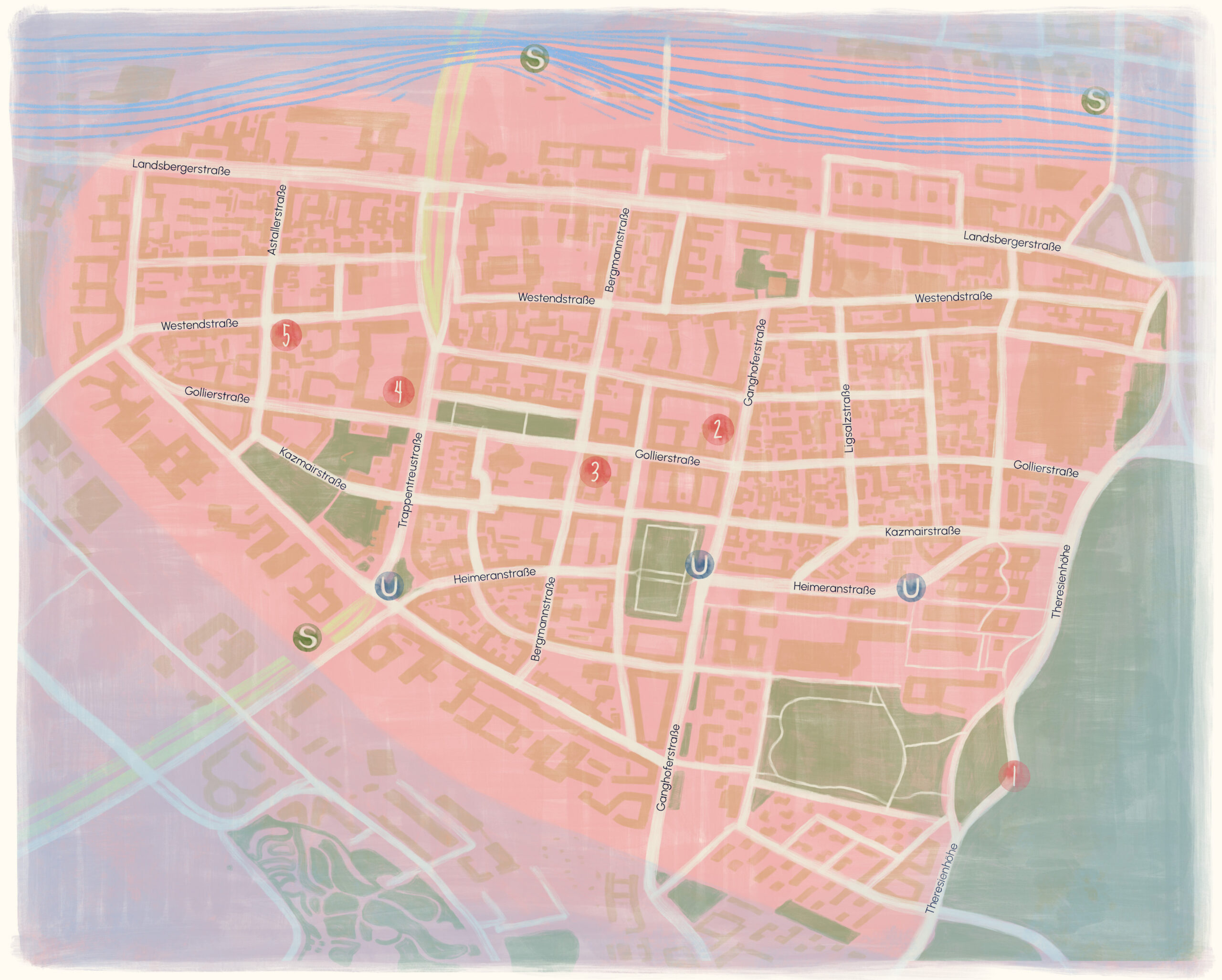
Illustrated map of Munich's Westend neighbourhood with numbered story locations marked in red – Westend Stories by Lea Reusse

Westend Stories

Every place has a story, and Munich’s Westend has more than a few.

Das Westend, Münchens kleiner, aber faszinierender Stadtbezirk, ist reich an Kultur und Geschichten, die nur darauf warten, entdeckt zu werden.Auf einer Stadtteilkarte sind verschiedene Orte im Westend mit einem QR-Code markiert, die du mit deinem Handy scannen kannst, um die dazugehörigen Comics und Geschichten des Westends direkt auf deinem Bildschirm zu sehen. "Westend Stories" ist ein kreatives und interaktives Kunstprojekt, das erfolgreich die Verbindung zwischen Stadtteilgeschichte und Illustration herstellt und so eine neue Perspektive auf das Münchner Westend bietet.
Gefördert wurde das Projekt vom Kulturreferat der Landeshauptstadt München.
Das Westend, Münchens kleiner, aber faszinierender Stadtbezirk, ist reich an Kultur und Geschichten, die nur darauf warten, entdeckt zu werden.Auf einer Stadtteilkarte sind verschiedene Orte im Westend mit einem QR-Code markiert, die du mit deinem Handy scannen kannst, um die dazugehörigen Comics und Geschichten des Westends direkt auf deinem Bildschirm zu sehen. "Westend Stories" ist ein kreatives und interaktives Kunstprojekt, das erfolgreich die Verbindung zwischen Stadtteilgeschichte und Illustration herstellt und so eine neue Perspektive auf das Münchner Westend bietet.
Gefördert wurde das Projekt vom Kulturreferat der Landeshauptstadt München.
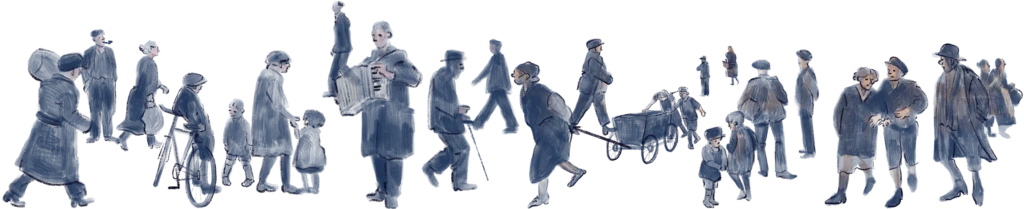
Panoramic illustration of a crowd of early 20th century Westend residents going about their daily lives – Westend Stories by Lea ReussePanoramic illustration of a crowd of early 20th century Westend residents going about their daily lives – Westend Stories by Lea Reusse

Bavaria's New Neighbors

How Munich's Smallest District Came to Be
Theresienhöhe 16
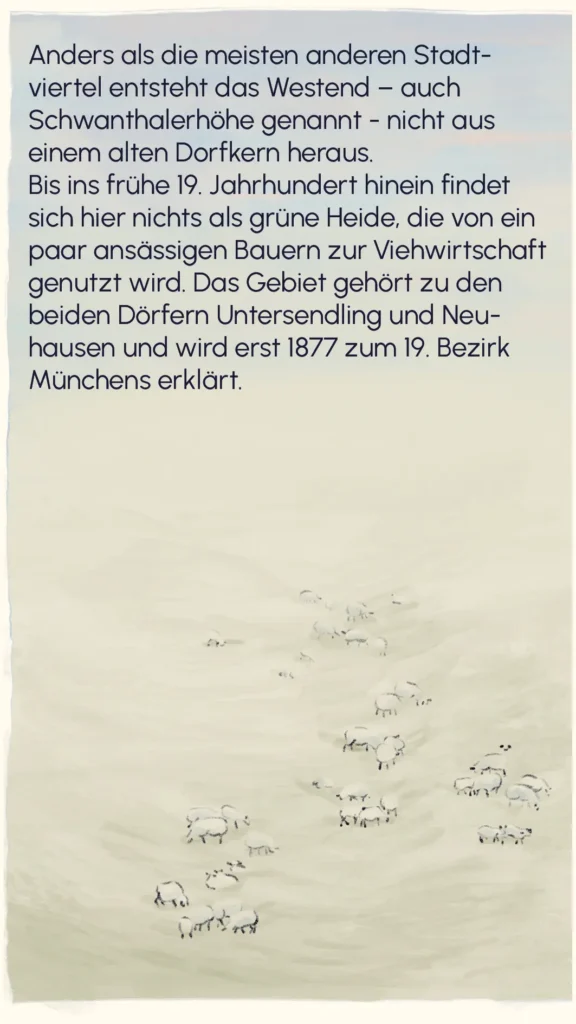
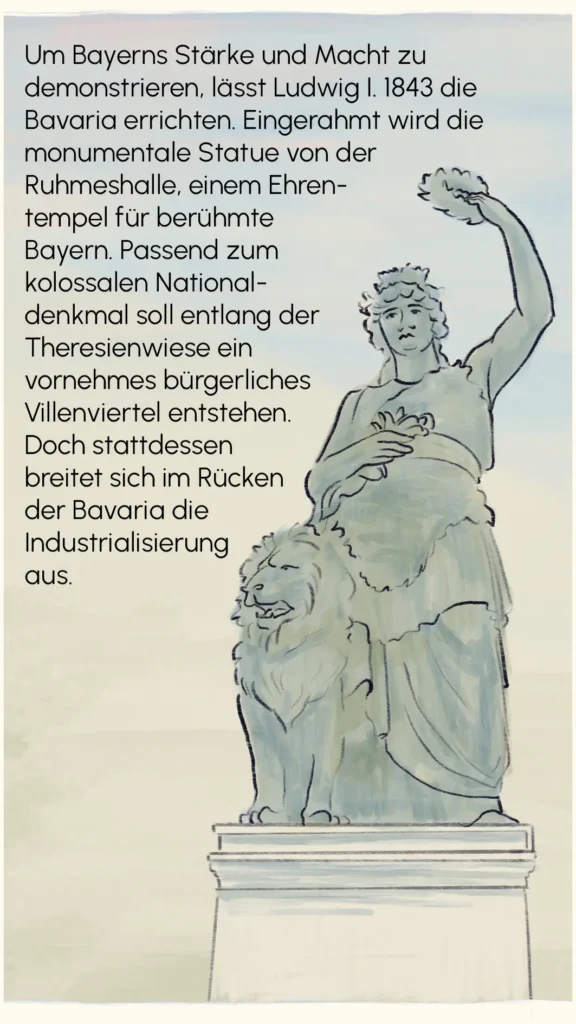
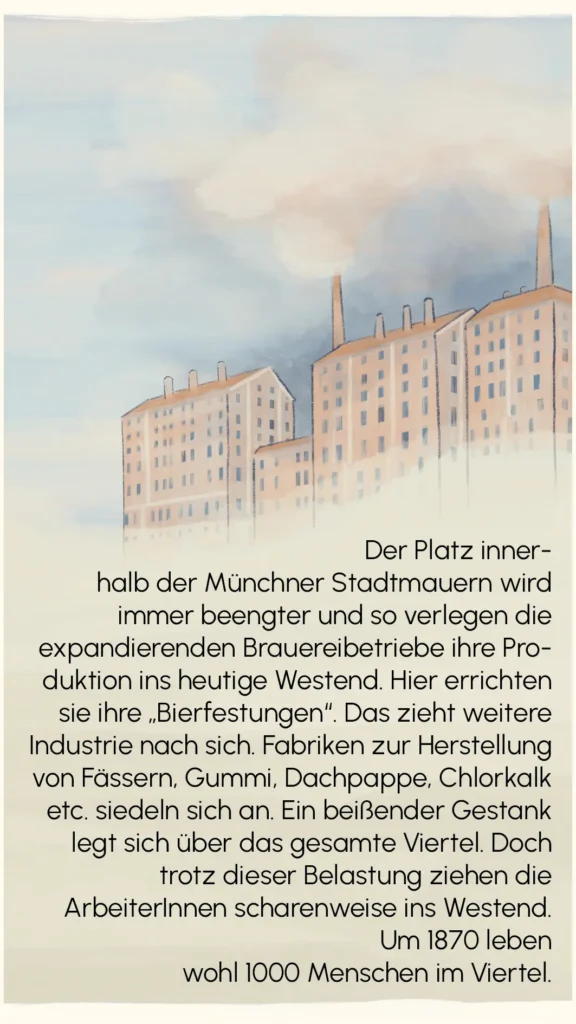
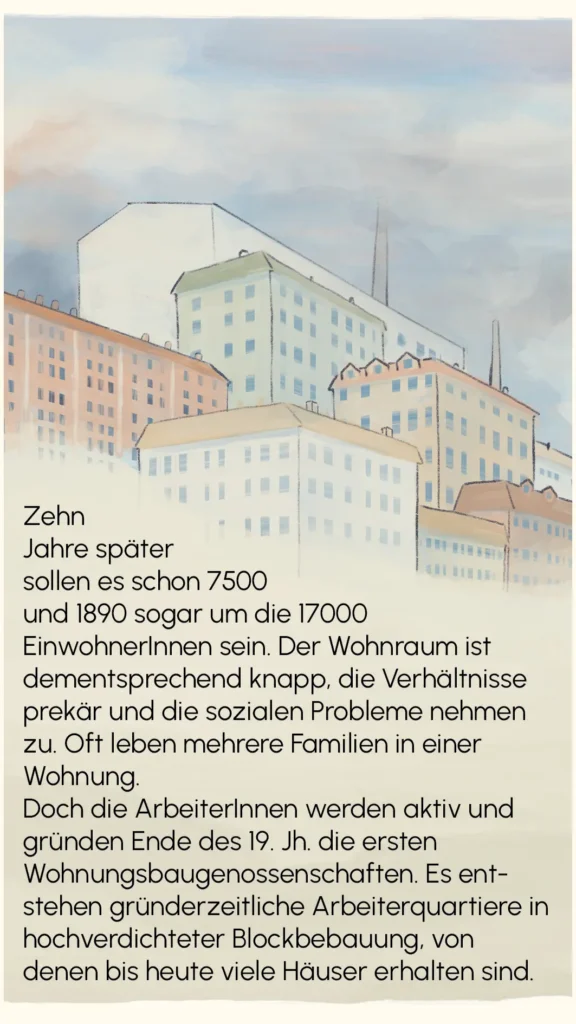
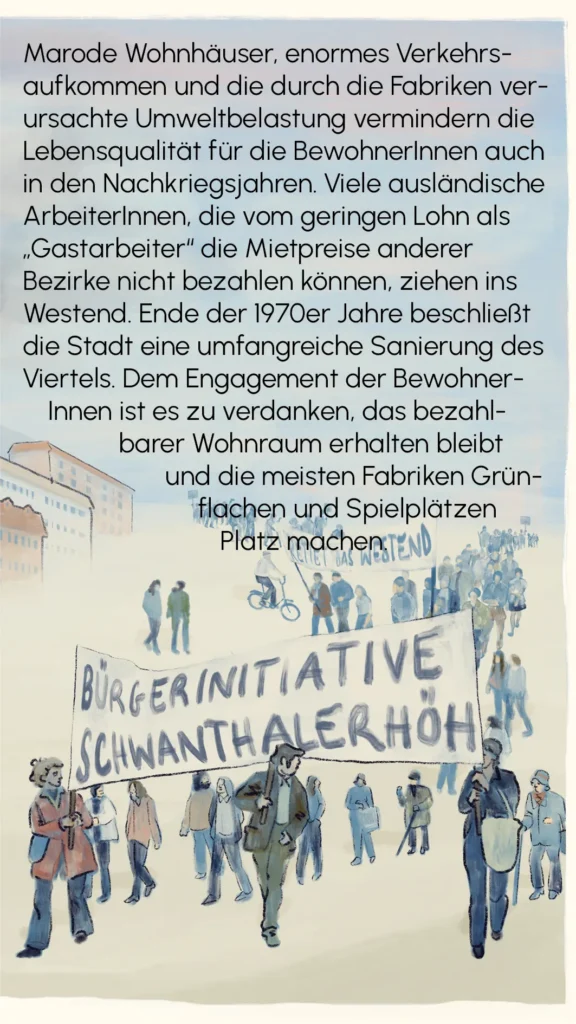
Open heathland with grazing sheep, depicting the Westend area before industrialisation – "Bavaria's New Neighbors", Westend Stories by Lea ReusseThe Bavaria statue on her pedestal with industrial residential blocks rising behind her – "Bavaria's New Neighbors", Westend Stories by Lea ReusseDense residential blocks under a pale sky showing rapid urban growth in Munich's Westend – "Bavaria's New Neighbors", Westend Stories by Lea ReusseClose-up of overcrowded Westend apartment facades with small windows and crumbling plaster – "Bavaria's New Neighbors", Westend Stories by Lea ReusseResidents marching through the Westend holding a Bürgerinitiative Schwanthalerhöhe banner – "Bavaria's New Neighbors", Westend Stories by Lea ReusseBusy present-day street scene in Munich's Westend with people from many backgrounds – "Bavaria's New Neighbors", Westend Stories by Lea Reusse

Fräulein Gerda

A Girl from Westend Who Suddenly Caught the World's Attention
Ganghoferstraße 18
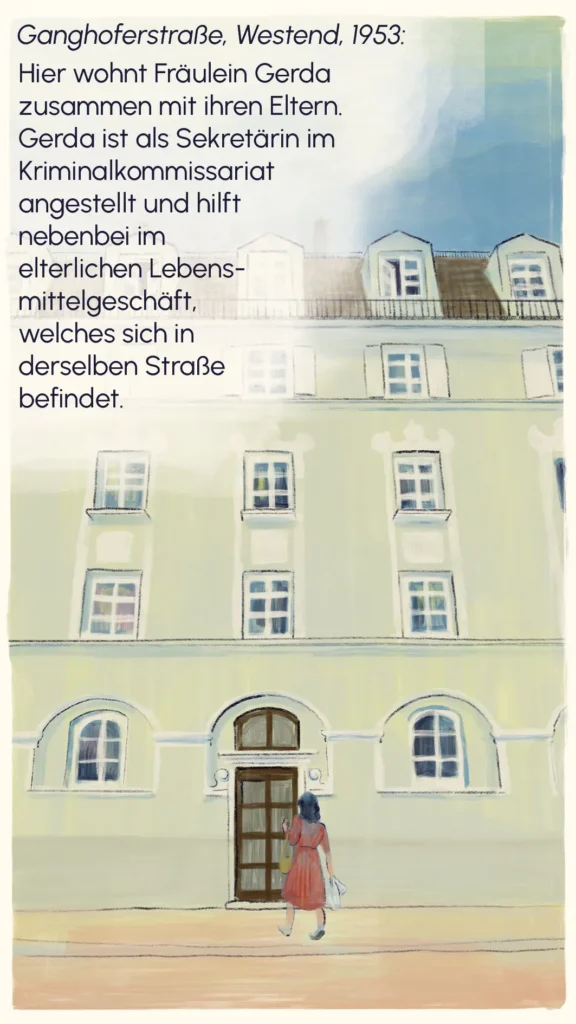
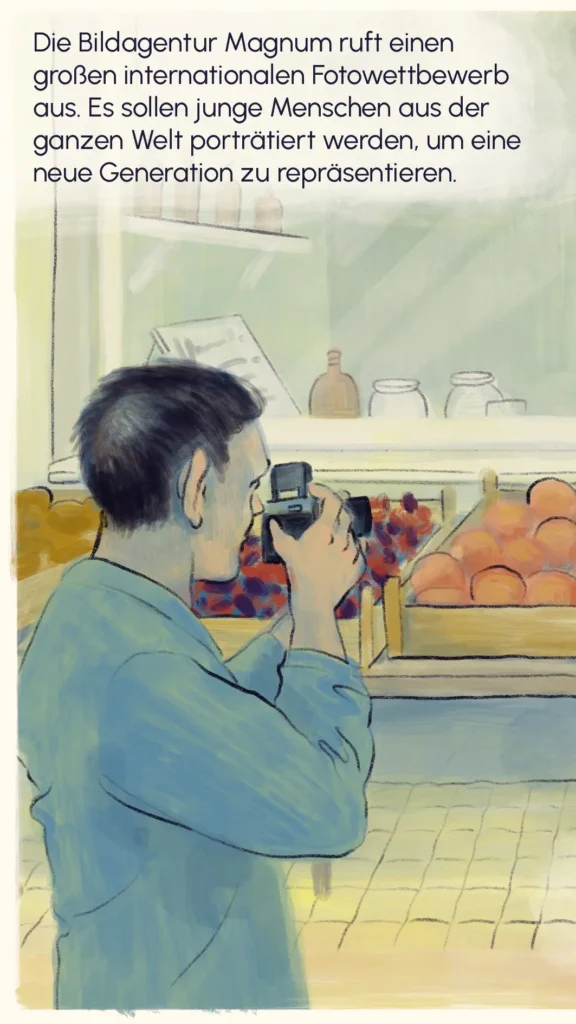
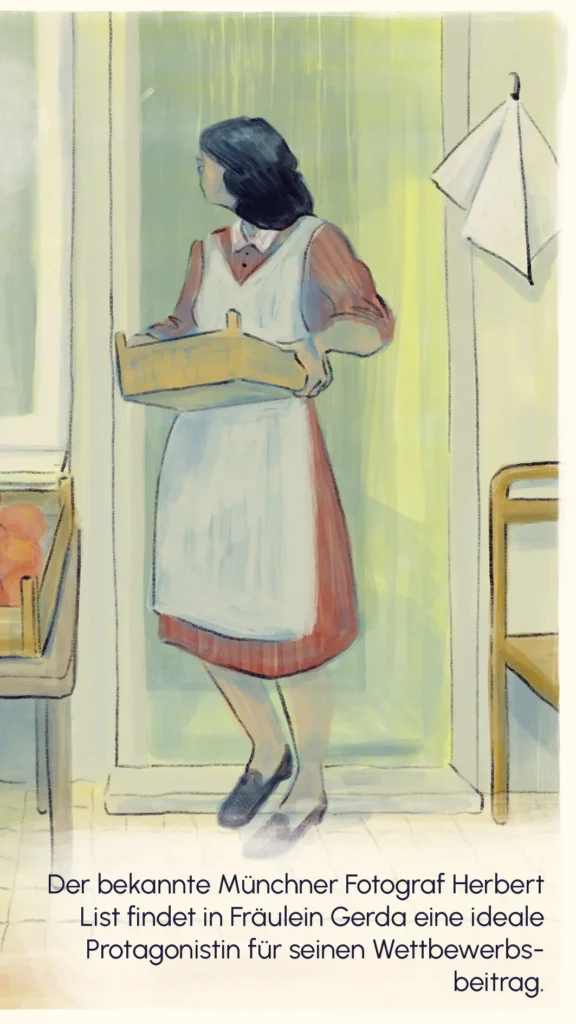
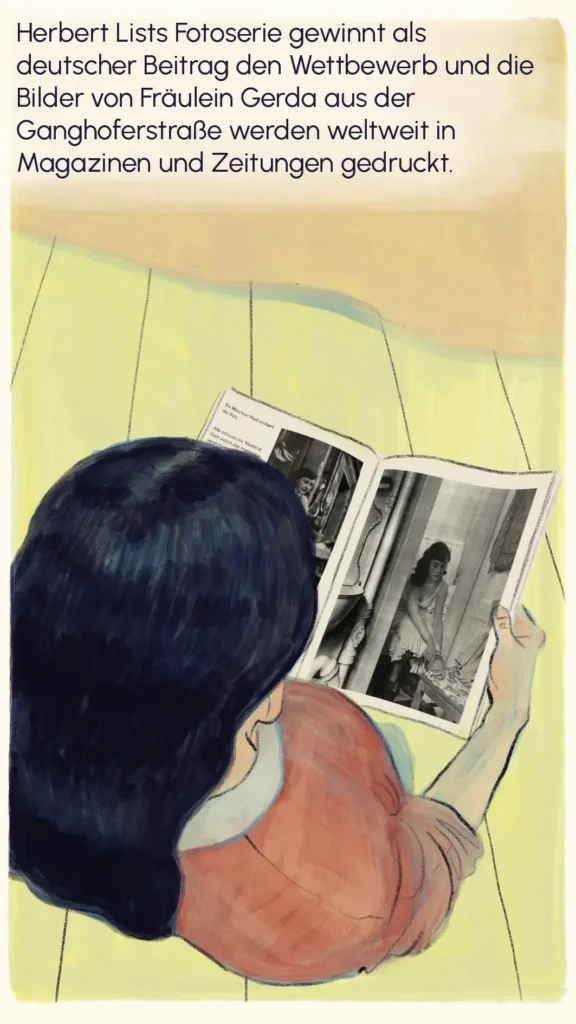
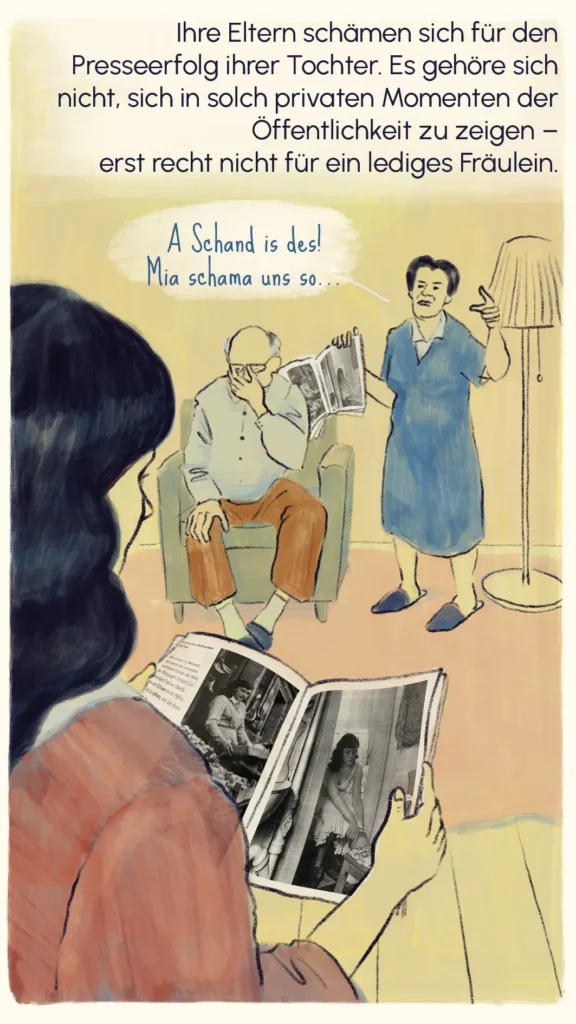
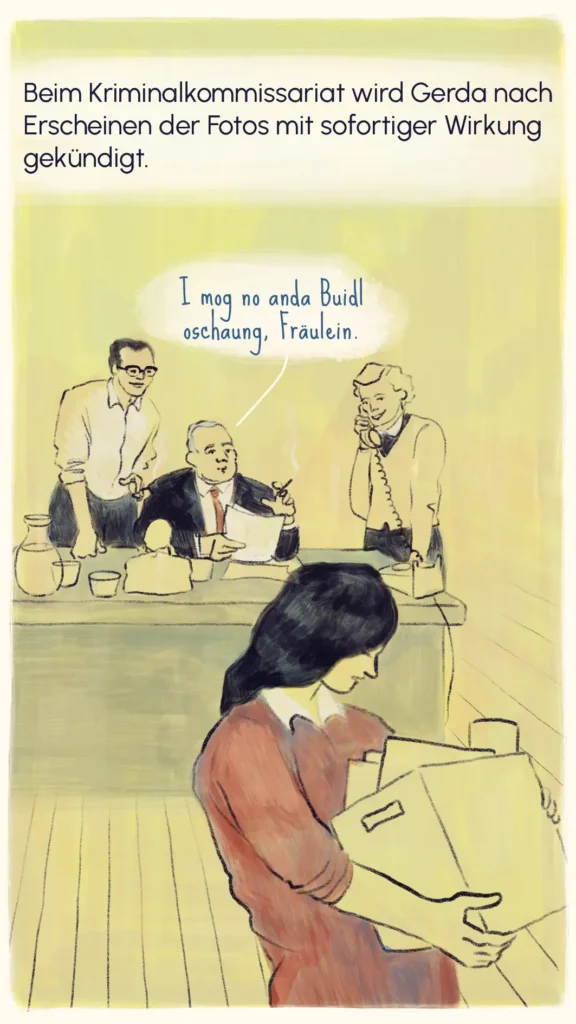
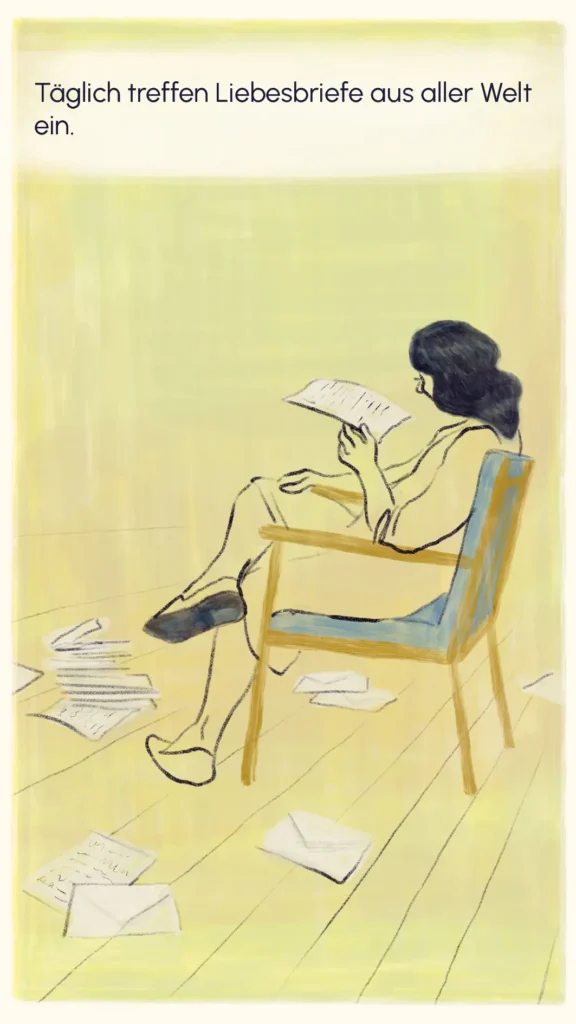
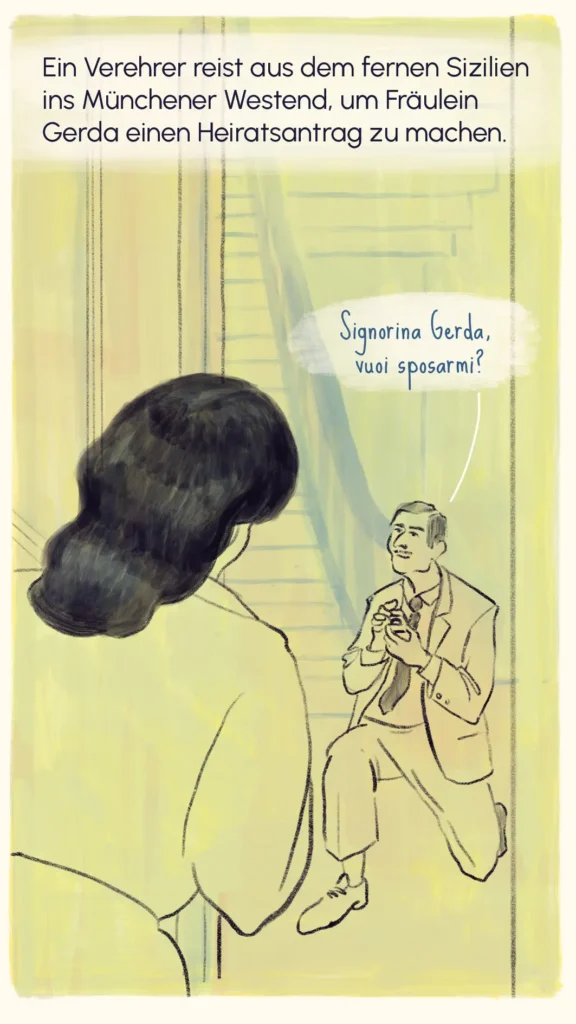
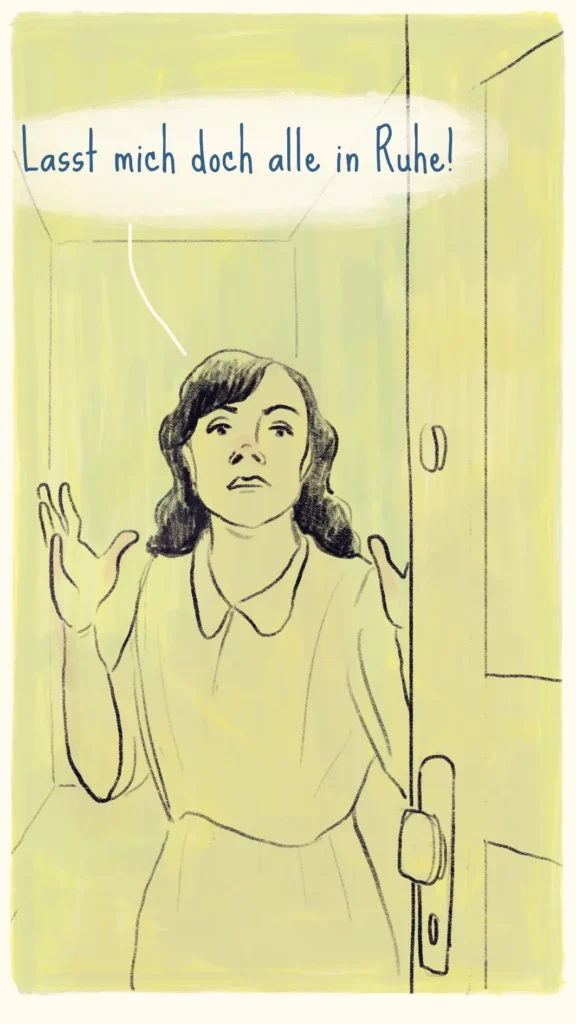
Gerda's apartment building on Ganghoferstraße in Munich's Westend, 1953 – "Fräulein Gerda", Westend Stories by Lea ReussePhotographer Herbert List photographing Gerda in her family's shop as part of the Magnum photo competition shoot – "Fräulein Gerda", Westend Stories by Lea ReusseGerda carrying a crate through a doorway in her family's shop during the photo shoot with Herbert List – "Fräulein Gerda", Westend Stories by Lea ReusseGerda reading a magazine featuring her own published photographs – "Fräulein Gerda", Westend Stories by Lea ReusseGerda's parents confronting her in the living room, ashamed of her public photos – "Fräulein Gerda", Westend Stories by Lea ReusseGerda's employer dismissing her across a desk after her photos appear in the press, making inappropriate remarks – "Fräulein Gerda", Westend Stories by Lea ReusseGerda sitting alone in a chair surrounded by love letters from admirers around the world – "Fräulein Gerda", Westend Stories by Lea ReusseA suitor from Sicily kneeling before Gerda in a stairwell, proposing marriage – "Fräulein Gerda", Westend Stories by Lea ReusseGerda standing at her door with raised hands, fed up with all the attention – "Fräulein Gerda", Westend Stories by Lea ReusseEmpty hallway with a closed door, signalling Gerda's withdrawal from public life – "Fräulein Gerda", Westend Stories by Lea Reusse

Ledigenheim

Living Conditions in the Early 20th Century and a Really Good Idea
Bergmannstraße 35
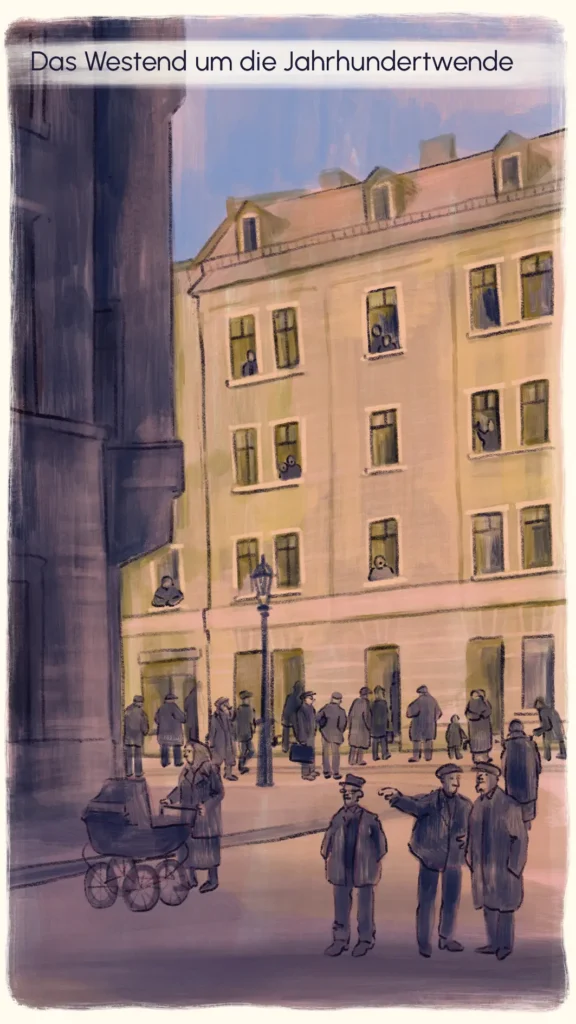
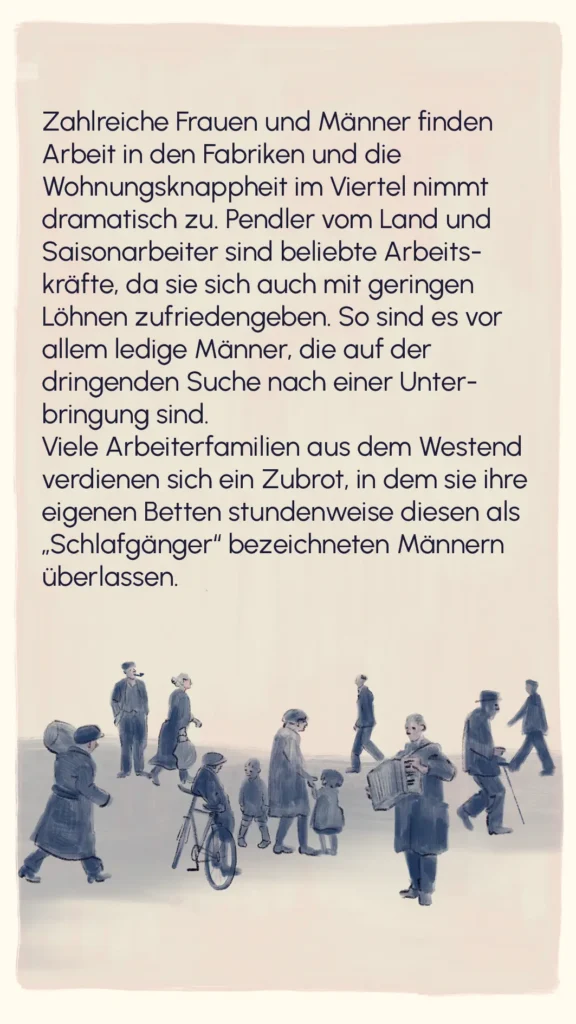
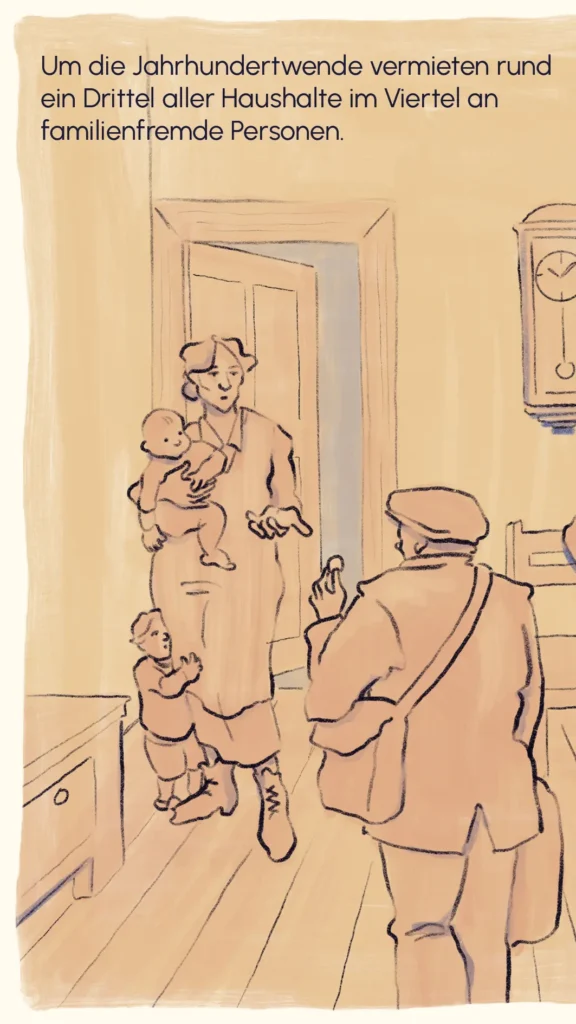
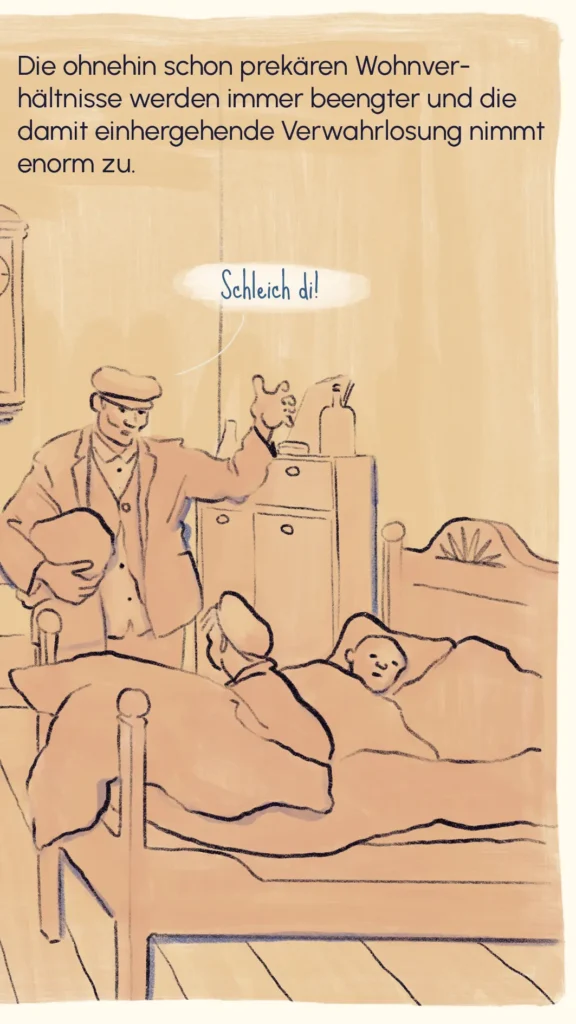
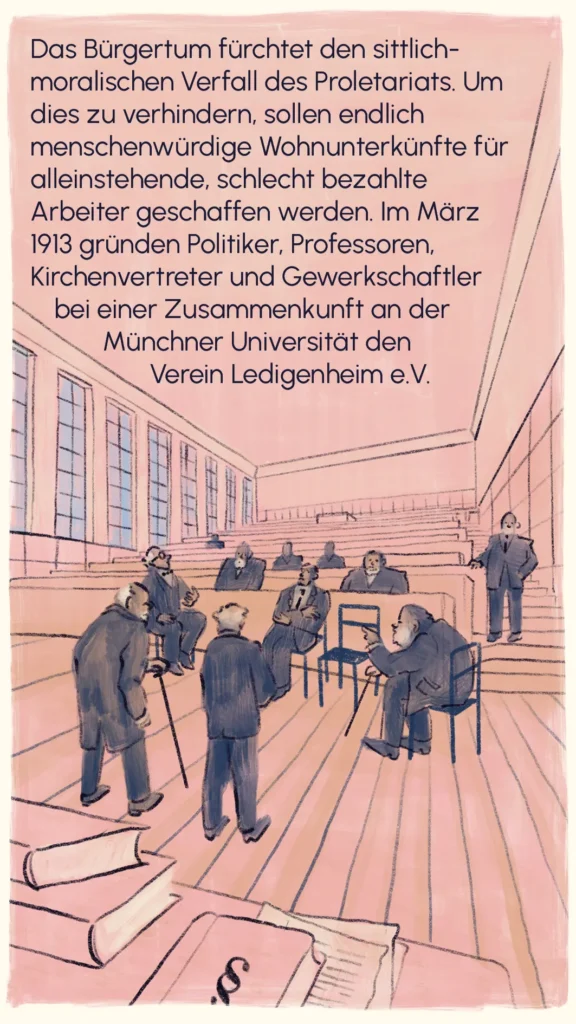
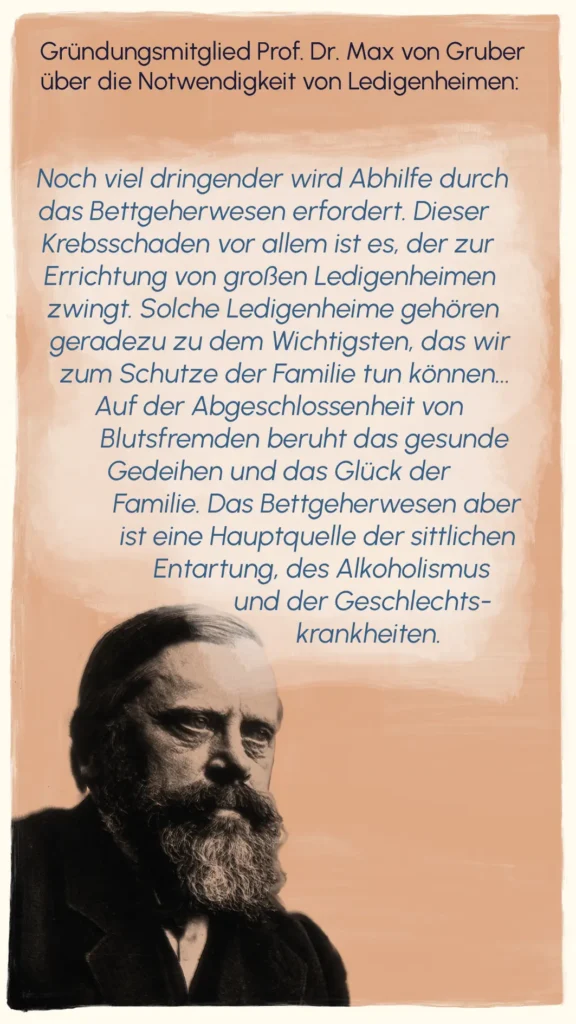
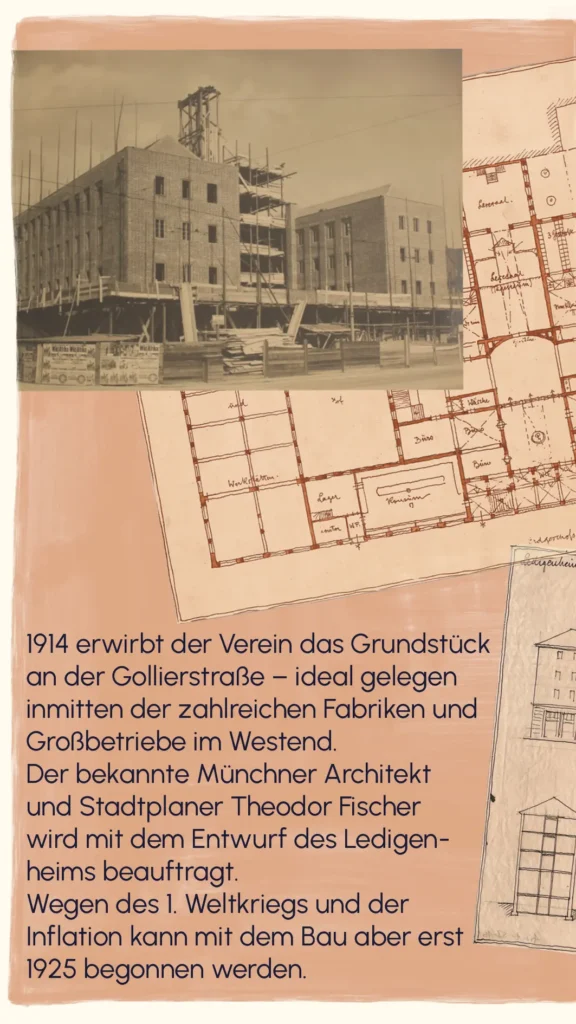
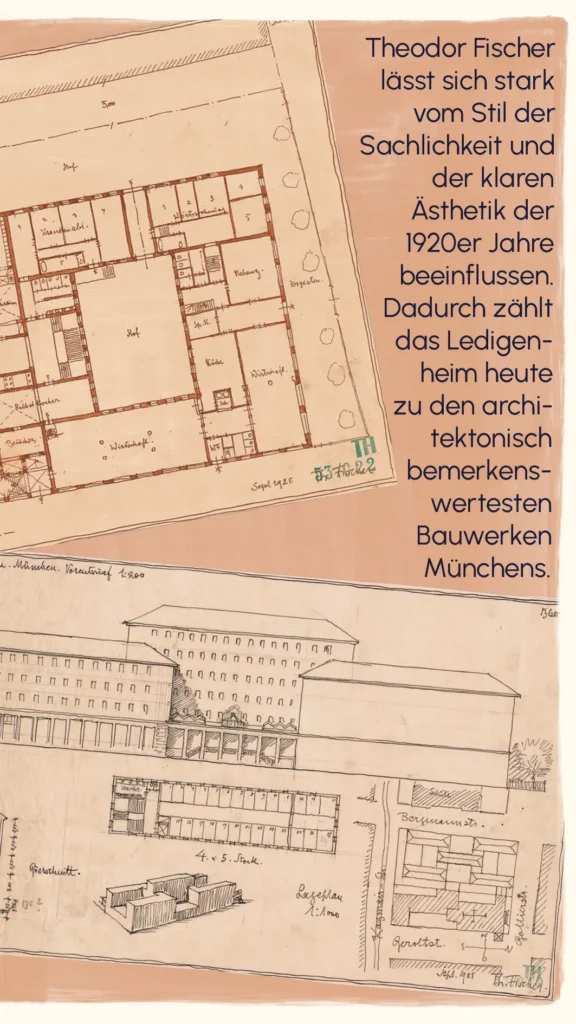
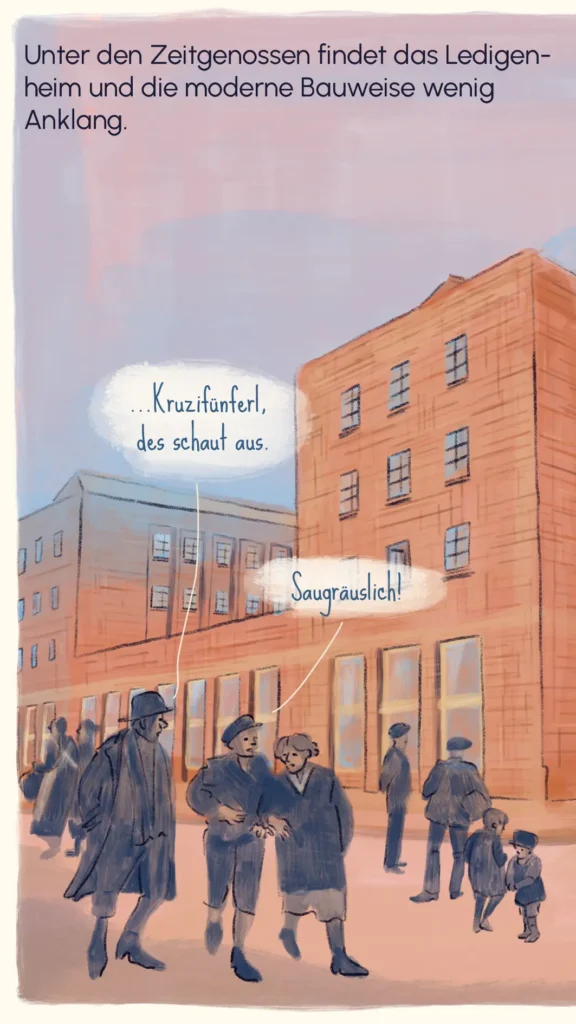
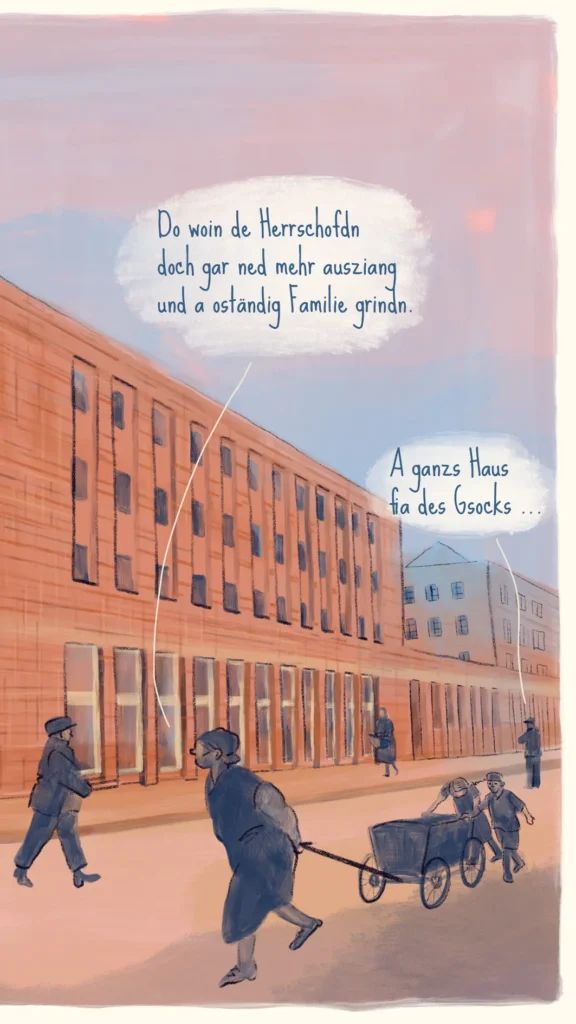
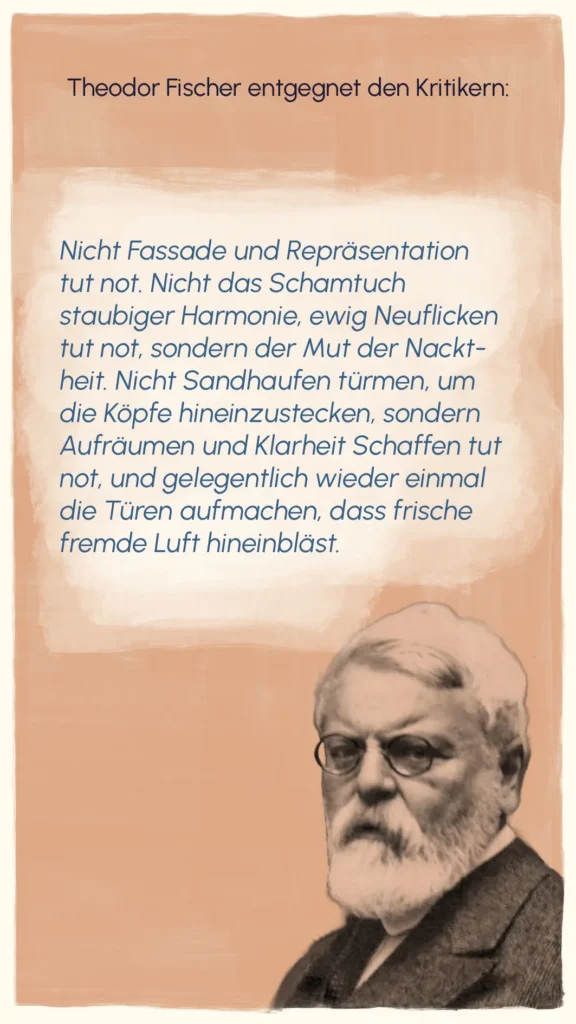
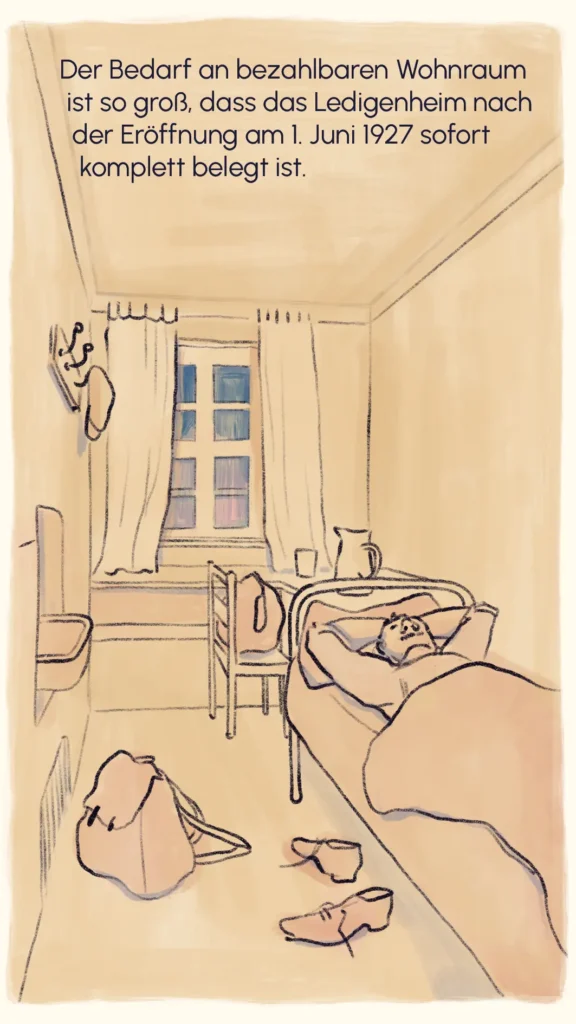
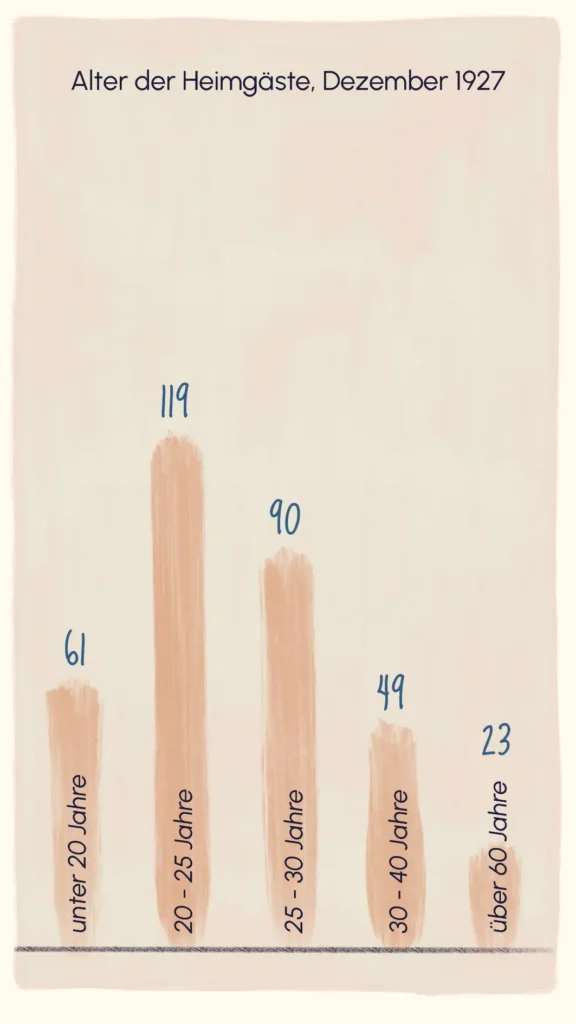
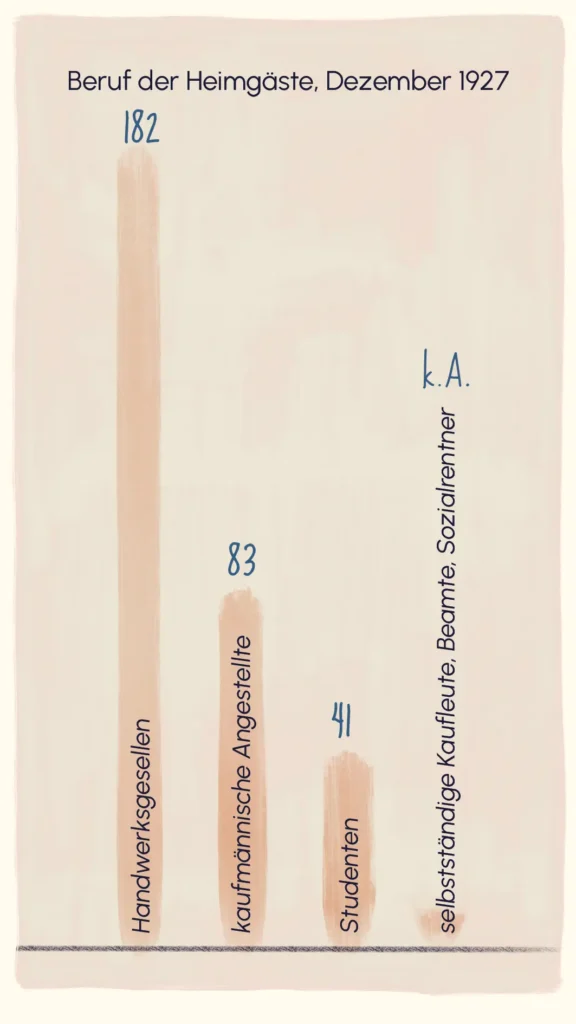
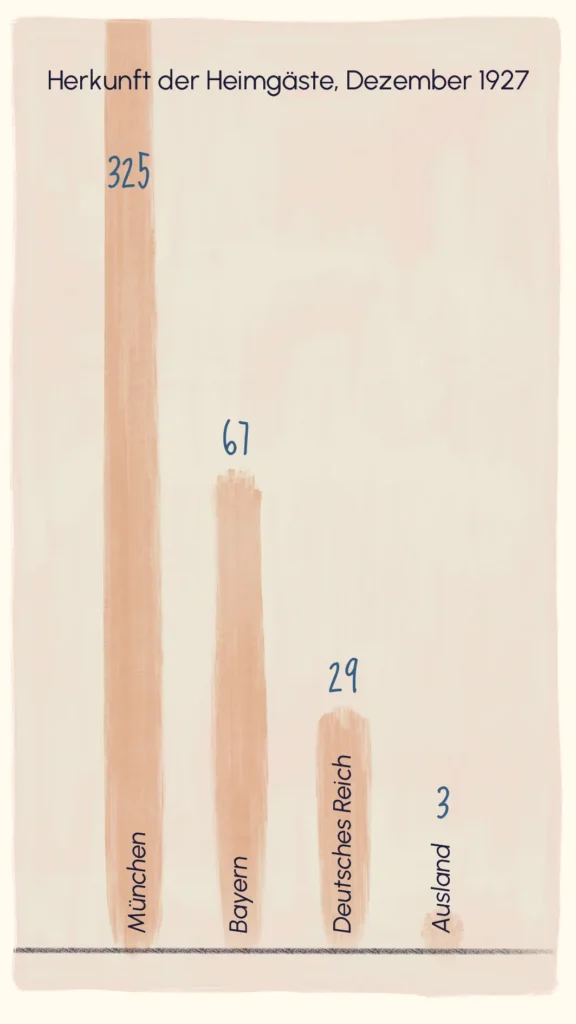
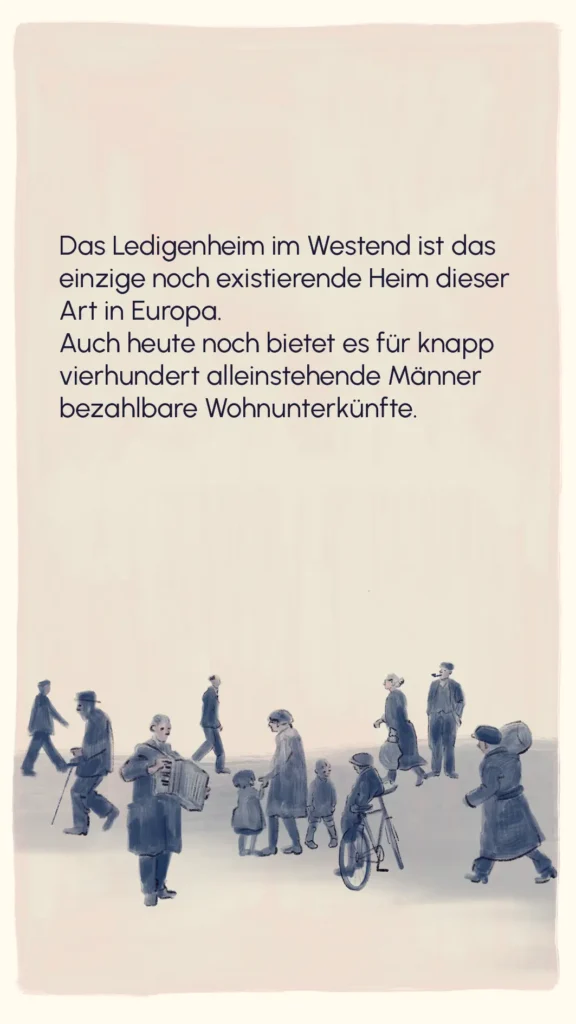
Street scene in Munich's Westend around 1900 with workers and a pram – "Ledigenheim", Westend Stories by Lea ReusseCrowd of seasonal workers and commuters arriving in the Westend in search of housing – "Ledigenheim", Westend Stories by Lea ReusseWorking-class family renting out a room to a lodger at their apartment door – "Ledigenheim", Westend Stories by Lea ReusseOvercrowded shared bedroom with men sleeping in shifts, one being told to leave – "Ledigenheim", Westend Stories by Lea ReusseFounding assembly of the Verein Ledigenheim e.V. at Munich University in 1913 – "Ledigenheim", Westend Stories by Lea ReussePortrait of founding member Professor Dr. Max von Gruber alongside his quote on the necessity of the Ledigenheim – "Ledigenheim", Westend Stories by Lea ReusseHistoric architectural drawings and construction photo of the Ledigenheim building on Gollierstraße – "Ledigenheim", Westend Stories by Lea ReusseFloor plan drawings of the Ledigenheim by architect Theodor Fischer, 1920s Sachlichkeit style – "Ledigenheim", Westend Stories by Lea ReussePassers-by reacting sceptically to the newly built Ledigenheim with Bavarian dialect speech bubbles – "Ledigenheim", Westend Stories by Lea ReusseStreet scene showing residents questioning the modern architecture of the Ledigenheim – "Ledigenheim", Westend Stories by Lea ReussePortrait of architect Theodor Fischer alongside his reply to critics of the Ledigenheim's design – "Ledigenheim", Westend Stories by Lea ReusseSimple furnished room in the Ledigenheim on its opening day, 1 June 1927 – "Ledigenheim", Westend Stories by Lea ReusseHand-drawn bar chart showing the age distribution of Ledigenheim residents in December 1927 – "Ledigenheim", Westend Stories by Lea ReusseHand-drawn bar chart showing the occupations of Ledigenheim residents in December 1927 – "Ledigenheim", Westend Stories by Lea ReusseHand-drawn bar chart showing the regional origins of Ledigenheim residents in December 1927 – "Ledigenheim", Westend Stories by Lea ReusseSmall figures of people walking, representing the roughly 400 single men still housed in the Ledigenheim today – "Ledigenheim", Westend Stories by Lea Reusse

Metzeler

Working in Westend's Largest Factory
Gollierstraße 70
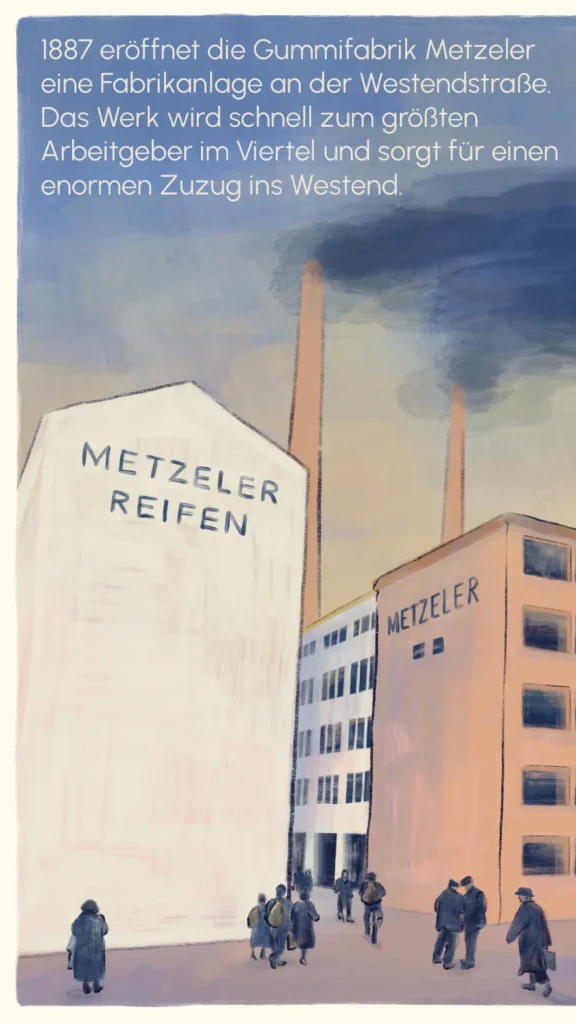
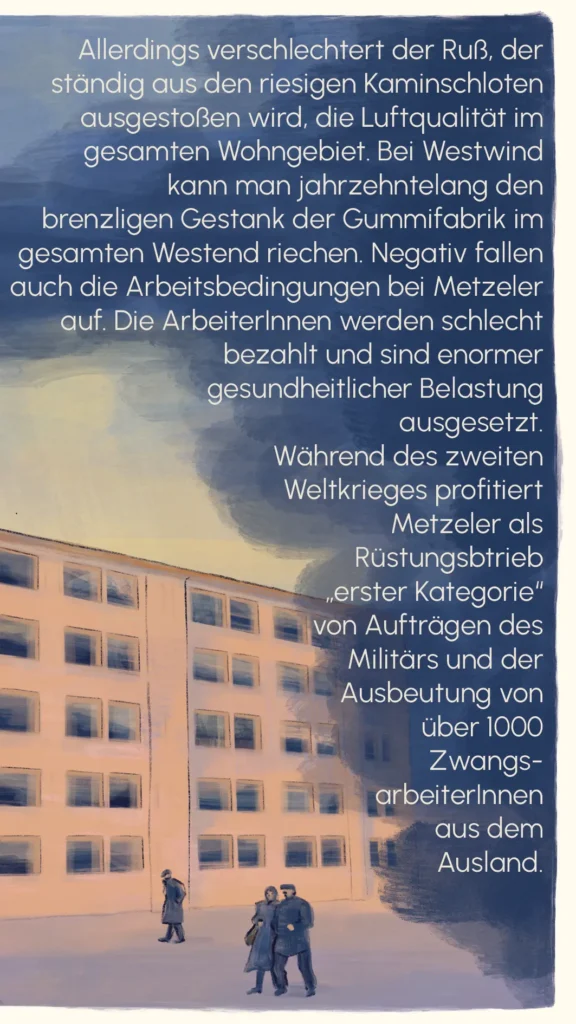
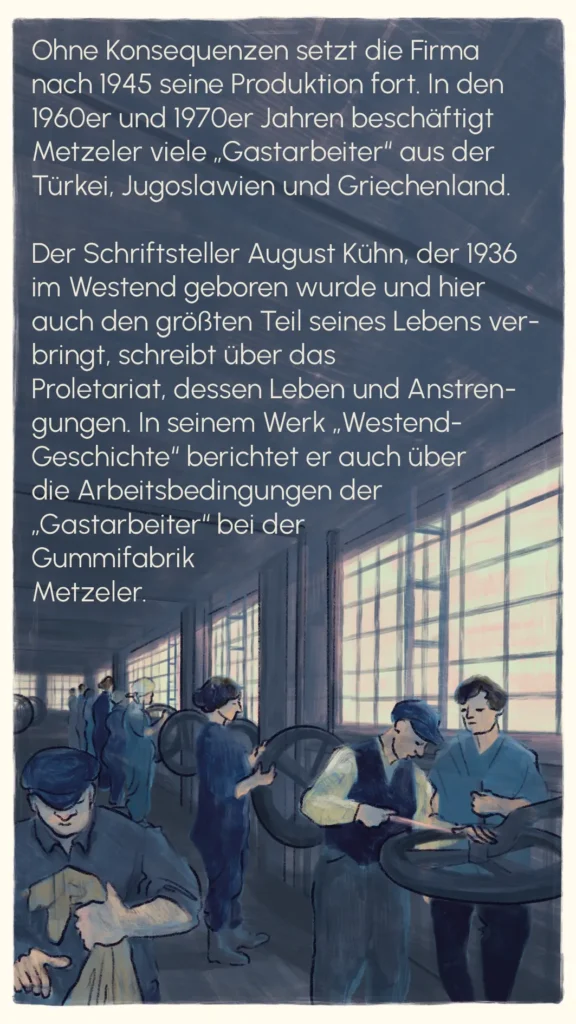
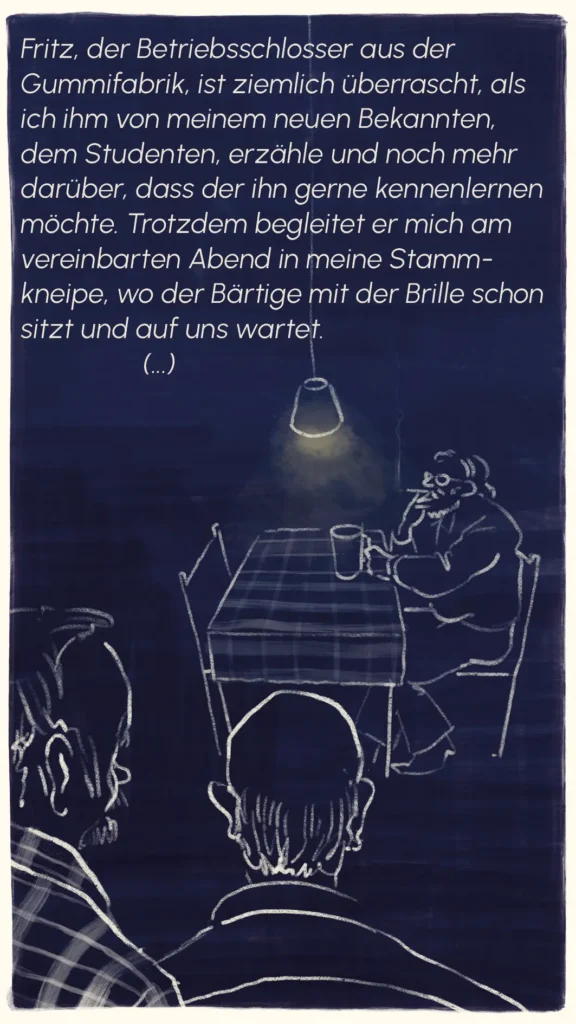
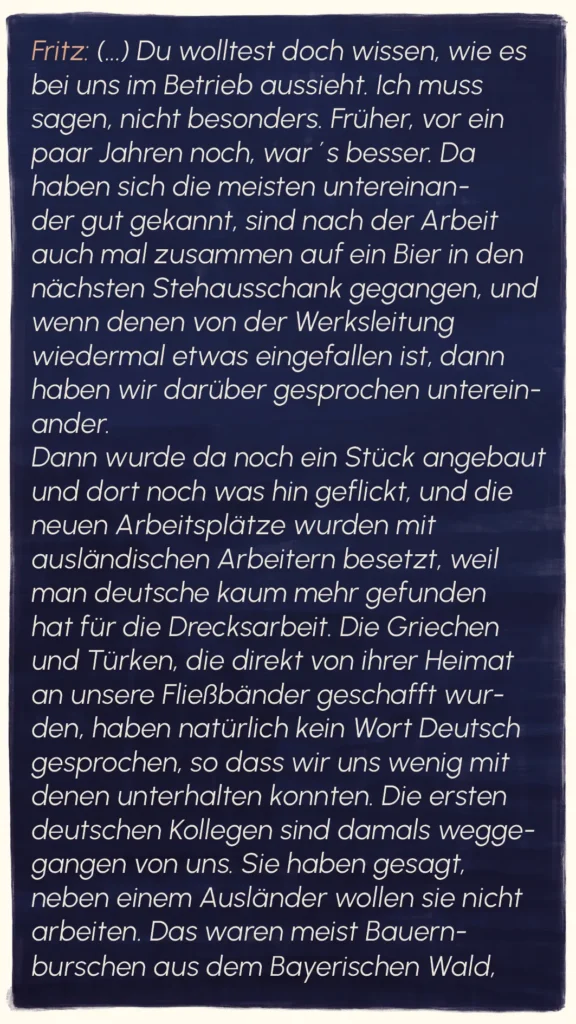
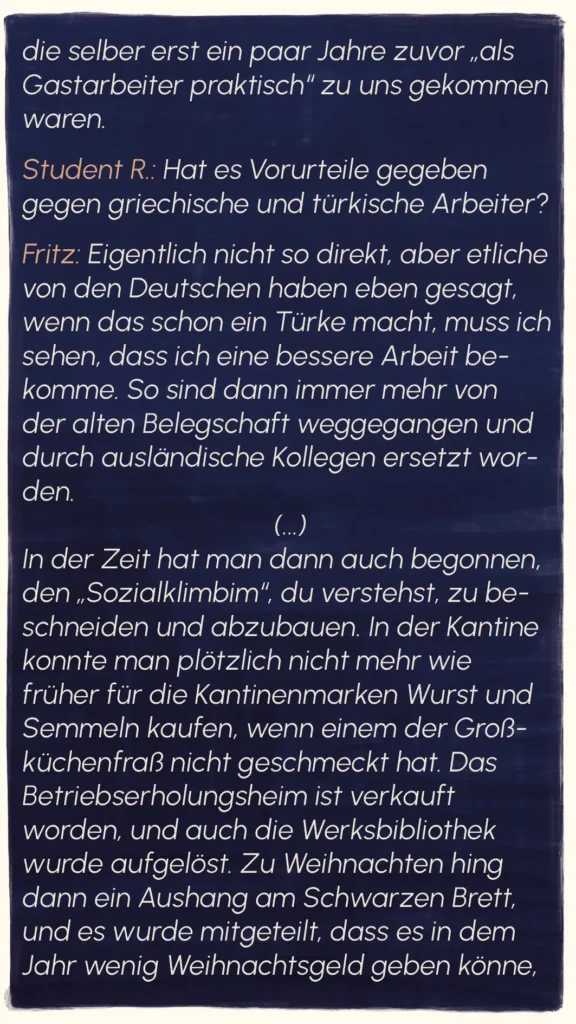
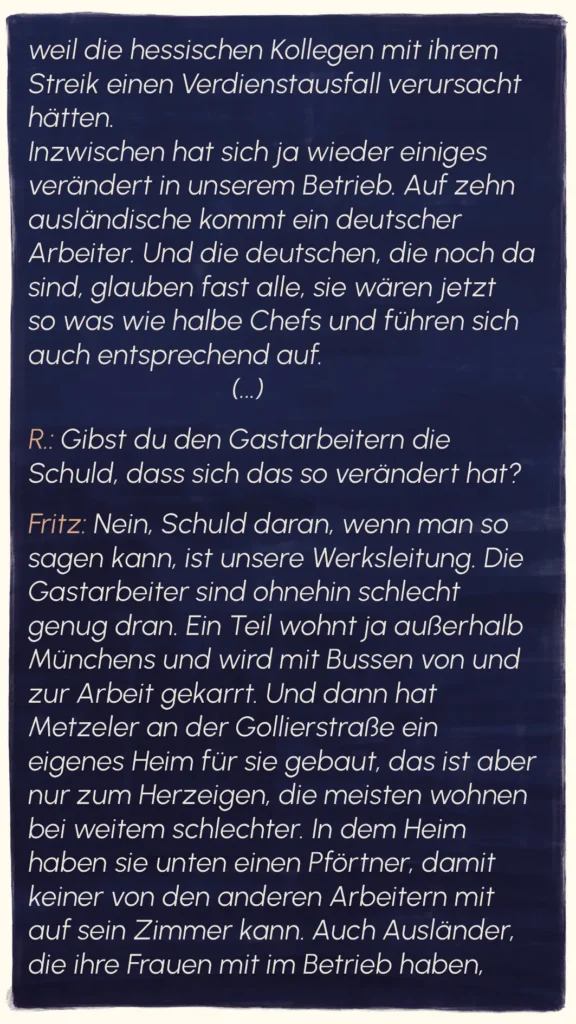
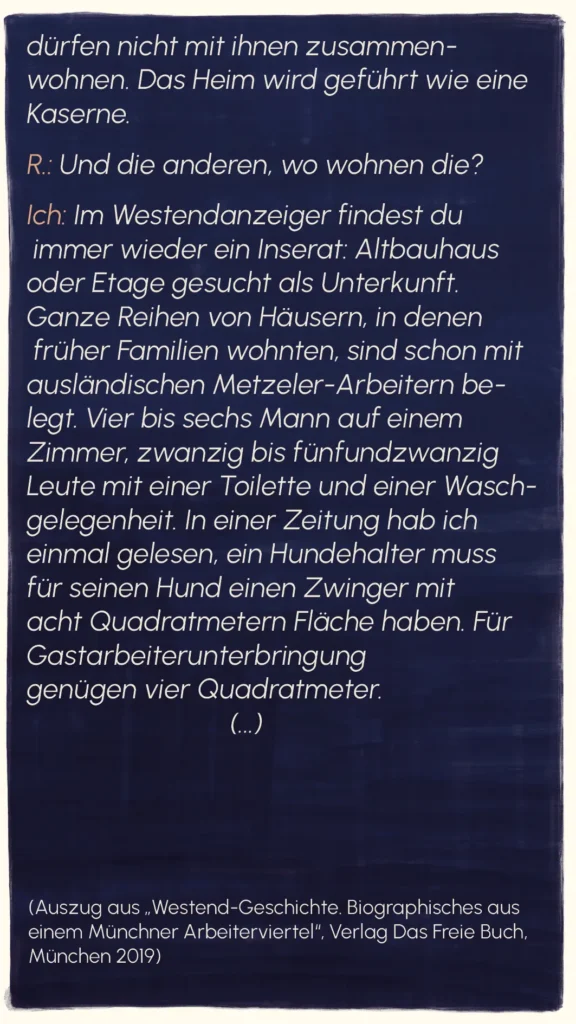
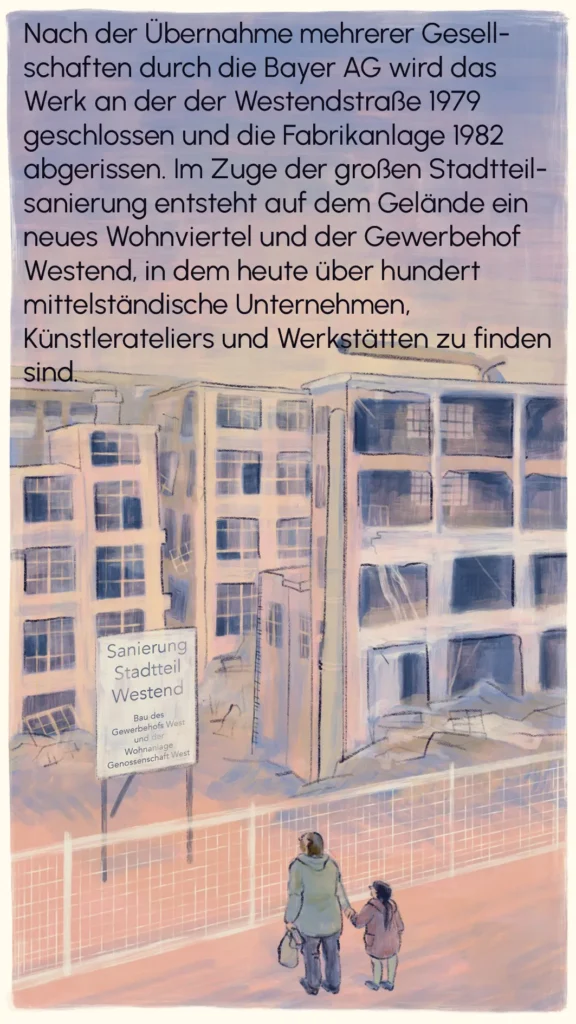
The Metzeler rubber factory under a smoky sky with workers in the foreground – "Metzeler", Westend Stories by Lea ReusseThe Metzeler factory building at dusk with small figures of workers outside – "Metzeler", Westend Stories by Lea ReusseWorkers inside the Metzeler factory under industrial lighting, including foreign Gastarbeiter – "Metzeler", Westend Stories by Lea ReusseThree men talking in a dimly lit pub, one a factory worker recounting life at Metzeler – "Metzeler", Westend Stories by Lea ReusseIllustrated interview text with Fritz the factory worker describing working conditions and discrimination at Metzeler – "Metzeler", Westend Stories by Lea ReusseContinuation of Fritz's account of prejudice against Greek and Turkish Gastarbeiter at the Metzeler factory – "Metzeler", Westend Stories by Lea ReusseFritz describing the deteriorating living and working conditions of foreign workers at Metzeler in the 1960s and 70s – "Metzeler", Westend Stories by Lea ReusseAccount of overcrowded housing conditions for Metzeler Gastarbeiter, citing newspaper comparisons to dog kennels – "Metzeler", Westend Stories by Lea ReusseAdult and child standing before the demolished Metzeler factory site with a "Sanierung Stadtteil Westend" sign, 1982 – "Metzeler", Westend Stories by Lea Reusse

The Moskovitz Family

A Jewish Family from the Neighborhood During the Nazi Era
Westendstraße 141
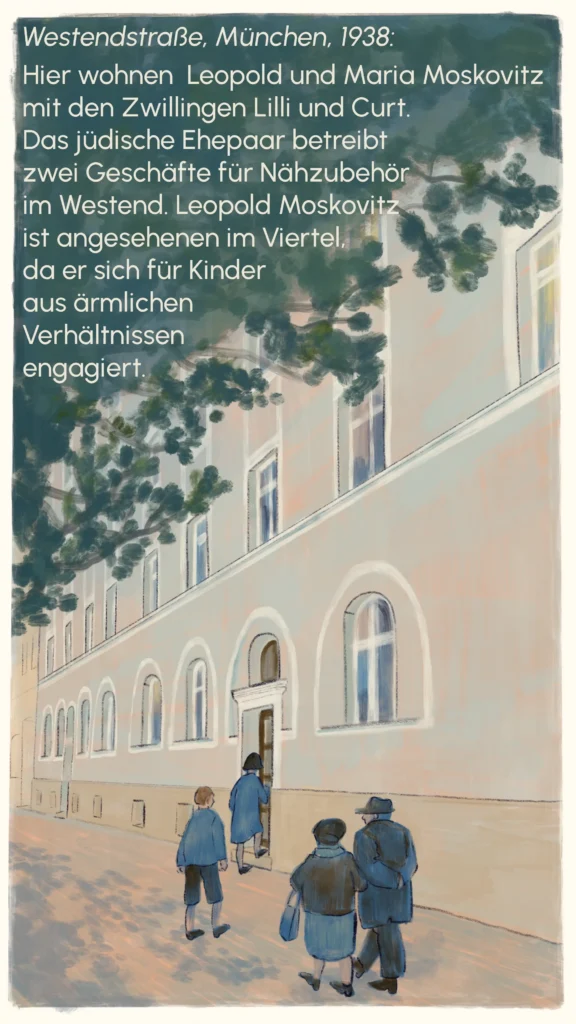
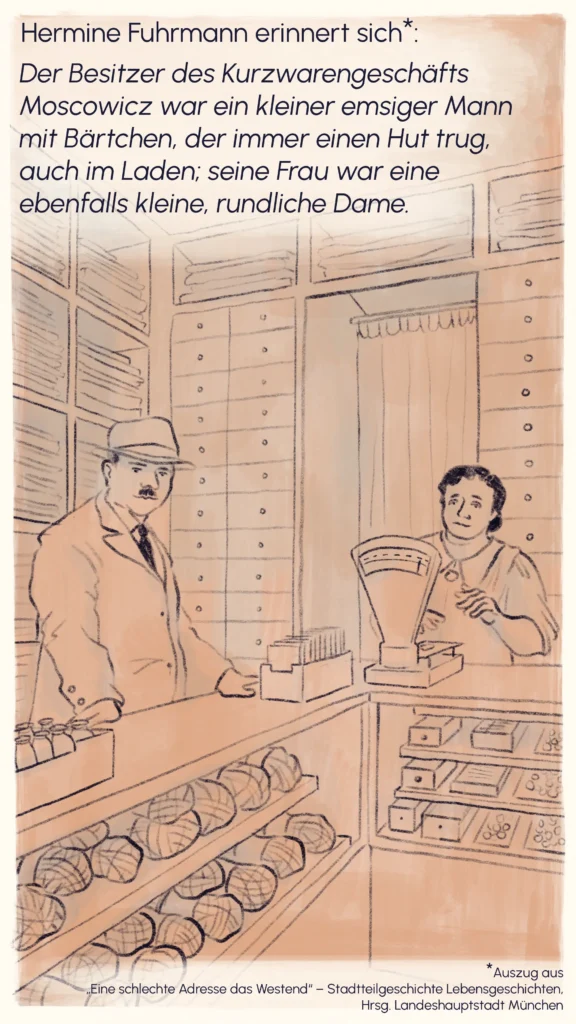
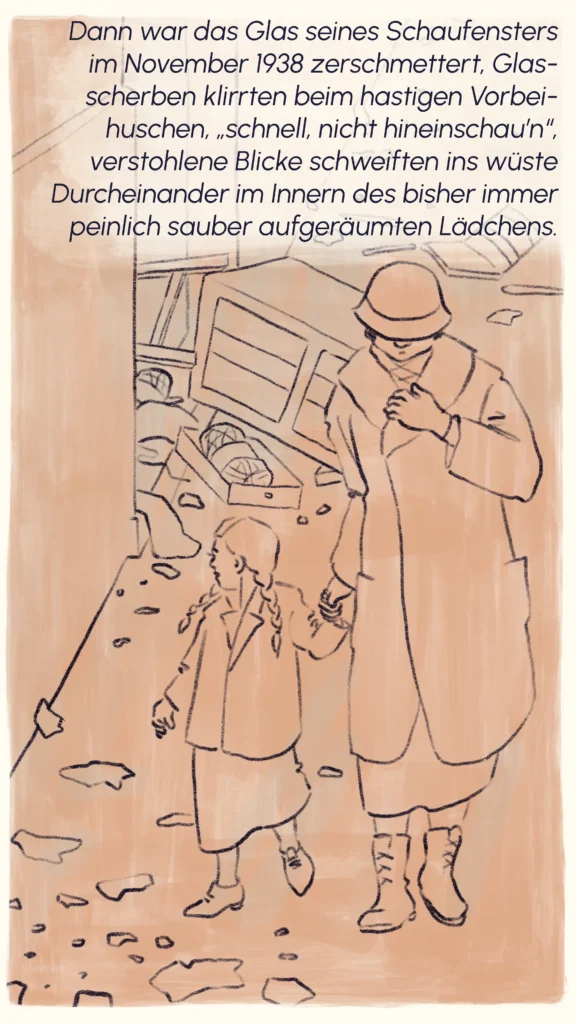
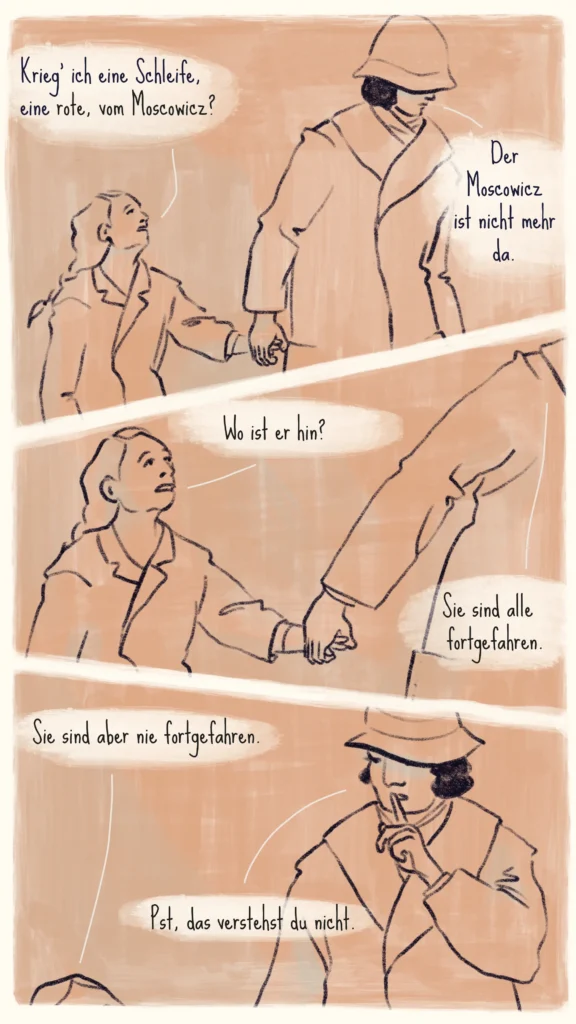
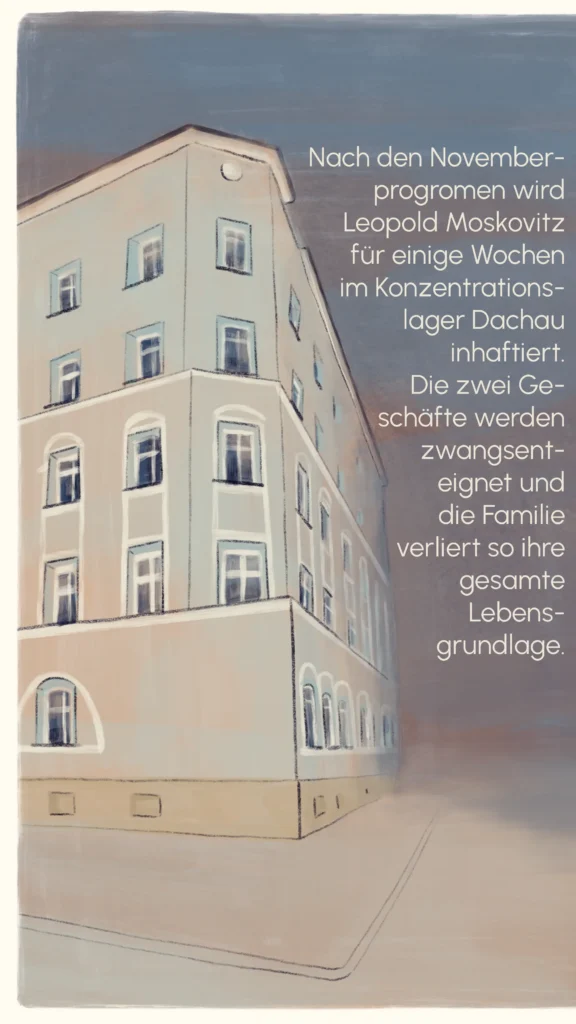
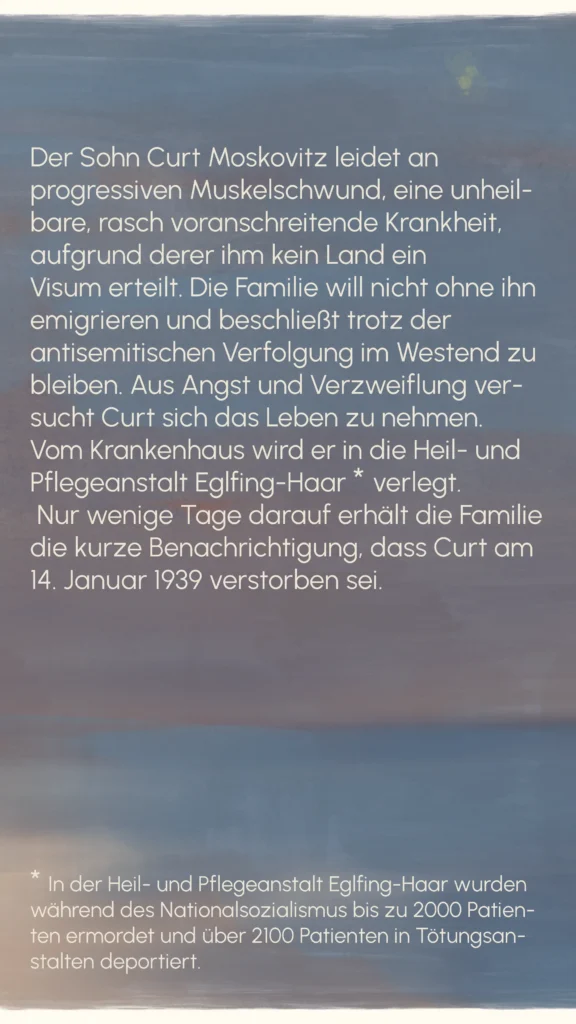
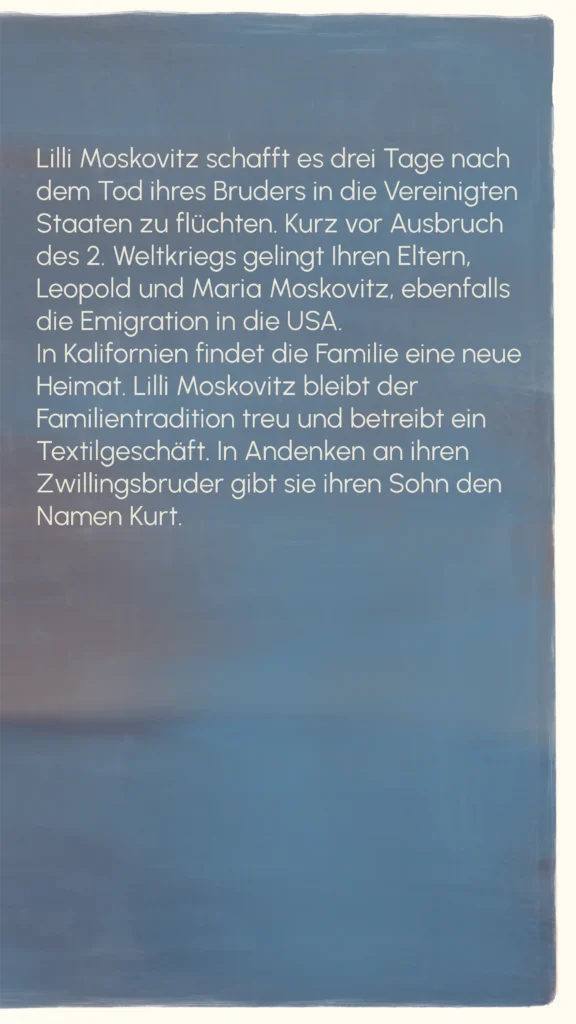
The Moskovitz family's apartment building on Westendstraße, Munich, 1938, with the family in the foreground – "The Moskovitz Family", Westend Stories by Lea ReusseLeopold and Maria Moskovitz serving a customer in their haberdashery shop in the Westend – "The Moskovitz Family", Westend Stories by Lea ReusseA woman and her daughter walking past the ransacked interior of the Moskovitz shop after the November pogrom, 1938 – "The Moskovitz Family", Westend Stories by Lea ReusseA daughter asking her mother in the street about the whereabouts of the Moskovitz family after the November pogrom – "The Moskovitz Family", Westend Stories by Lea ReusseThe Moskovitz apartment building at dusk after Leopold was taken to Dachau concentration camp and the family lost everything – "The Moskovitz Family", Westend Stories by Lea ReusseText panel recounting the fate of Curt Moskovitz, who died on 14 January 1939 in the Eglfing-Haar institution – "The Moskovitz Family", Westend Stories by Lea ReusseText panel describing Lilli Moskovitz's escape to the United States and her and her parents' new life in California – "The Moskovitz Family", Westend Stories by Lea Reusse
Panoramic illustration of a crowd of early 20th century Westend residents going about their daily lives – Westend Stories by Lea ReussePanoramic illustration of a crowd of early 20th century Westend residents going about their daily lives – Westend Stories by Lea Reusse